

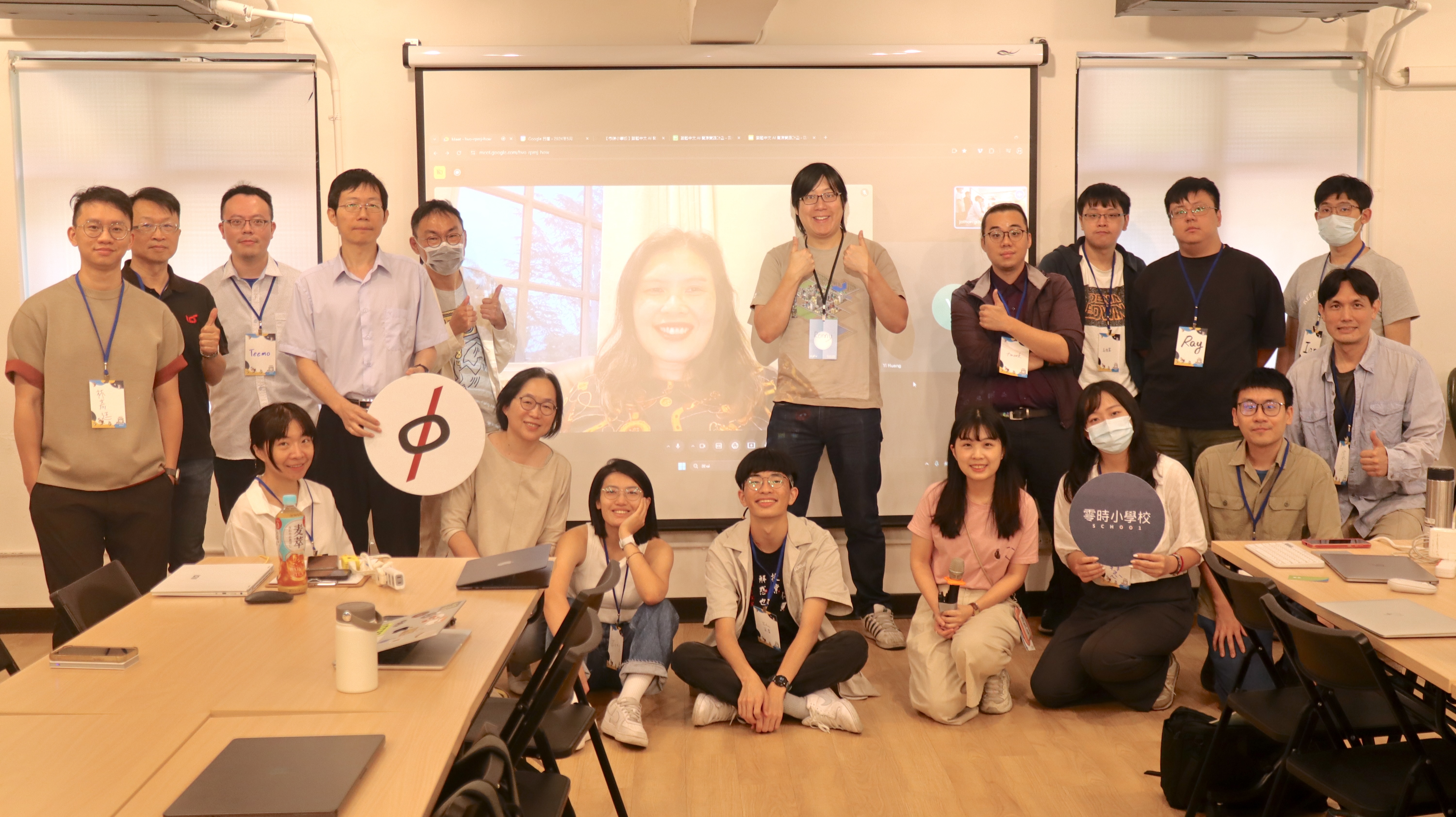
 The "Traditional Chinese AI Open Source Practice Project," in which Section Chief Chih-Jen Tsai of the Precision Health Research Center at Asia University participated, has concluded successfully. A results report was held on August 3, 2024, on the sixth floor of the Advantech Building at National Taiwan University of Science and Technology. Organized by the g0v (gov Zero) community, the project aimed to promote the development of open-source AI technology for Traditional Chinese, with an emphasis on Taiwan's local characteristics. Section Chief Chih-Jen Tsai and his team were responsible for organizing health education information from medical institution websites across Taiwan, rewriting it into a Q&A format, and performing data cleaning. This six-month project was officially completed at the end of September.
 Project Background and Objectives
The "Traditional Chinese AI Open Source Practice Project" is an innovative initiative designed to advance the development of AI technology for Traditional Chinese. The primary goal of the project is to establish a Large Language Model (LLM) that emphasizes Taiwan's local characteristics and to make its training data public on the HuggingFace platform. This not only helps enhance Taiwan's international competitiveness in the field of AI but also promotes the application and development of localized AI technology.
Contributions of the Precision Health Research Center, Asia University
In this project, the Precision Health Research Center at Asia University was responsible for the organization, Q&A rewriting, and data cleaning of health education information from medical institution websites across Taiwan (totaling 30,233 data sources). This data will be used to train Large Language Models and will be made public on the HuggingFace platform. The short-term goal was to clean 50,000 data entries and publish them on the HuggingFace dataset page (https://huggingface.co/datasets/aigrant/medical_health). The long-term goal is to become a hub for Traditional Chinese health and medical-related datasets in Taiwan, presented in an open-data format.
Presentation of Project Results
The project results were showcased in October. The organizers established a project results webpage and presented the team's achievement video (https://www.youtube.com/watch?v=-SrpSeygsBE) and HuggingFace links (https://huggingface.co/aigrant). These databases can be used to train Large Language Models that emphasize Taiwan's local characteristics, and partners interested in AI open source can learn more through these links.
Technical Details and Applications
On the technical level, the project provided a fine-tuning guide for the Large Language Model 'Meta-Llama-3.1-70B-bnb-4bit' (https://huggingface.co/unsloth/Meta-Llama-3.1-70B-Instruct-bnb-4bit) and utilized RTX A6000 for training. These technical details not only demonstrate the technical depth of the project but also provide valuable references for future research and applications.
Future Outlook
The long-term goal of the project is to serve as a hub for Traditional Chinese health and medical-related datasets in Taiwan. This will help drive the development of AI technology in Taiwan and promote the application of localized AI. The organizers promoted the achievements of the "Traditional Chinese AI Open Source Practice Project" during a hackathon held on September 29, 2024, at the Taipei Silicon Valley International Convention Center, and are planning future activities such as open-source achievement promotion and interviews.
Conclusion
The success of the "Traditional Chinese AI Open Source Practice Project" not only demonstrates Taiwan's strength in the field of AI technology but also provides valuable data and experience for future research and applications. The contributions of Section Chief Chih-Jen Tsai and his team from the Precision Health Research Center at Asia University laid a solid foundation for the project's success. In the future, as more open-source achievements are released, Taiwan's influence in the field of AI technology will continue to grow, making a greater contribution to the global development of AI.
The success of this project is undoubtedly a major step forward for the development of AI technology in Taiwan. We look forward to more similar projects in the future to elevate Taiwan's standing in the international AI technology arena.